Short term and latent effects of childhood trauma
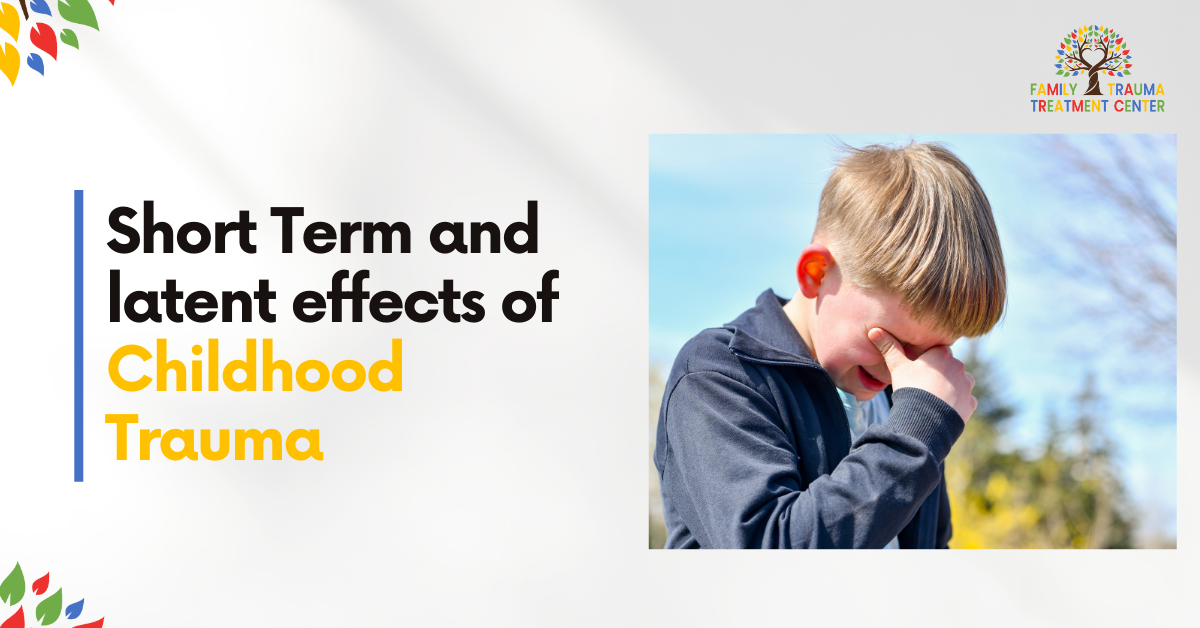
Childhood trauma can affect a child immediately — through sleep problems, anxiety, and emotional
outbursts — and for decades afterward, raising the risk of chronic illness, mental health conditions, and
relationship difficulties in adulthood. According to the CDC, 63.9% of U.S. adults report at least one
adverse childhood experience (ACE), and 17.3% report four or more — a threshold linked to significantly
higher rates of depression, heart disease, and substance use later in life.
How Common Is Childhood Trauma?
Childhood trauma is far more common than most people realize. Recent CDC-backed research paints a
clear picture:
- 76–80% of U.S. high school students report at least one adverse childhood experience (ACE),
and 18–22% report four or more, according to 2023–2024 Youth Risk Behavior Survey data
published in Pediatrics. - The most common ACEs among adolescents are emotional abuse (61–66%), physical abuse (32–
33%), and living in a household affected by poor mental health (28–36%). - Among children who receive trauma-related services, NCTSN’s national dataset of over 14,000
children found that 70.4% had experienced at least two types of complex trauma, and 11.7%
had experienced all five major trauma categories tracked.
Short-Term Effects
In the days and weeks after a traumatic event, children commonly show:
- Sleep disturbances and nightmares
- Increased clinginess or separation anxiety
- Irritability, angry outbursts, or sudden aggression
- Regression to earlier behaviors (bed-wetting, thumb-sucking)
- Difficulty concentrating at school
- Physical complaints like stomachaches or headaches with no medical cause
Long-Term Effects
Left unaddressed, childhood trauma’s effects compound over time:
Brain and body. Chronic childhood stress can alter how the body’s stress-response system develops,
leaving some children in a near-constant state of “fight or flight” — overreacting to ordinary stress well
into adulthood.
Emotional and relational health. Children with unresolved trauma often struggle to trust others,
regulate emotions, or form secure attachments — patterns that can follow them into adult friendships,
marriages, and parenting.
Long-term health. The landmark Adverse Childhood Experiences (ACE) Study — one of the largest
investigations ever conducted on this topic — found a direct, dose-dependent relationship between ACE
scores and adult risk for heart disease, cancer, chronic lung disease, depression, and early death.
Mental health. Roughly 40–50% of children are exposed to a traumatic event before age 18, and among
those exposed, an estimated 15–35% go on to develop PTSD — far higher than the 5% baseline rate
among all adolescents
The Brain-Body Connection
Trauma isn’t just psychological — it’s physiological. When a child’s environment doesn’t provide
consistent safety, their nervous system adapts by staying on high alert. This “survival mode” is protective
in the short term but becomes counterproductive as the child grows, making it harder to distinguish real
danger from everyday stress. This is precisely what trauma-focused treatment is designed to help
unwind.
When to Seek Professional Help
If a child’s symptoms last more than a month, worsen over time, or interfere with school, friendships, or
daily functioning, it’s time to talk to a trauma-informed clinician. Early intervention significantly
improves outcomes.
Frequently Asked Questions
What percentage of adults have experienced childhood trauma?
Nationally, 63.9% of U.S. adults report at least one adverse childhood experience, and 17.3% report four or more, according to CDC data.
Can childhood trauma effects show up years later?
Yes. Many effects — including chronic health conditions, anxiety, and relationship difficulties — don’t fully surface until adulthood, which is why the ACE Study tracked outcomes over decades.
Is childhood trauma treatable?
Yes. With trauma-informed treatment such as individual counseling, Forward-Facing Trauma Therapy, or PCIT for younger children, most children and adults can significantly reduce trauma symptoms and build lasting resilience.